





You glance at your wrist and see your heart rate – 72 bpm. But how? There’s no tiny stethoscope inside. No little nurse taking your pulse.
The truth? It’s just light. A green light, to be exact – and it’s having a party with your blood.
The green beam that counts your pulse
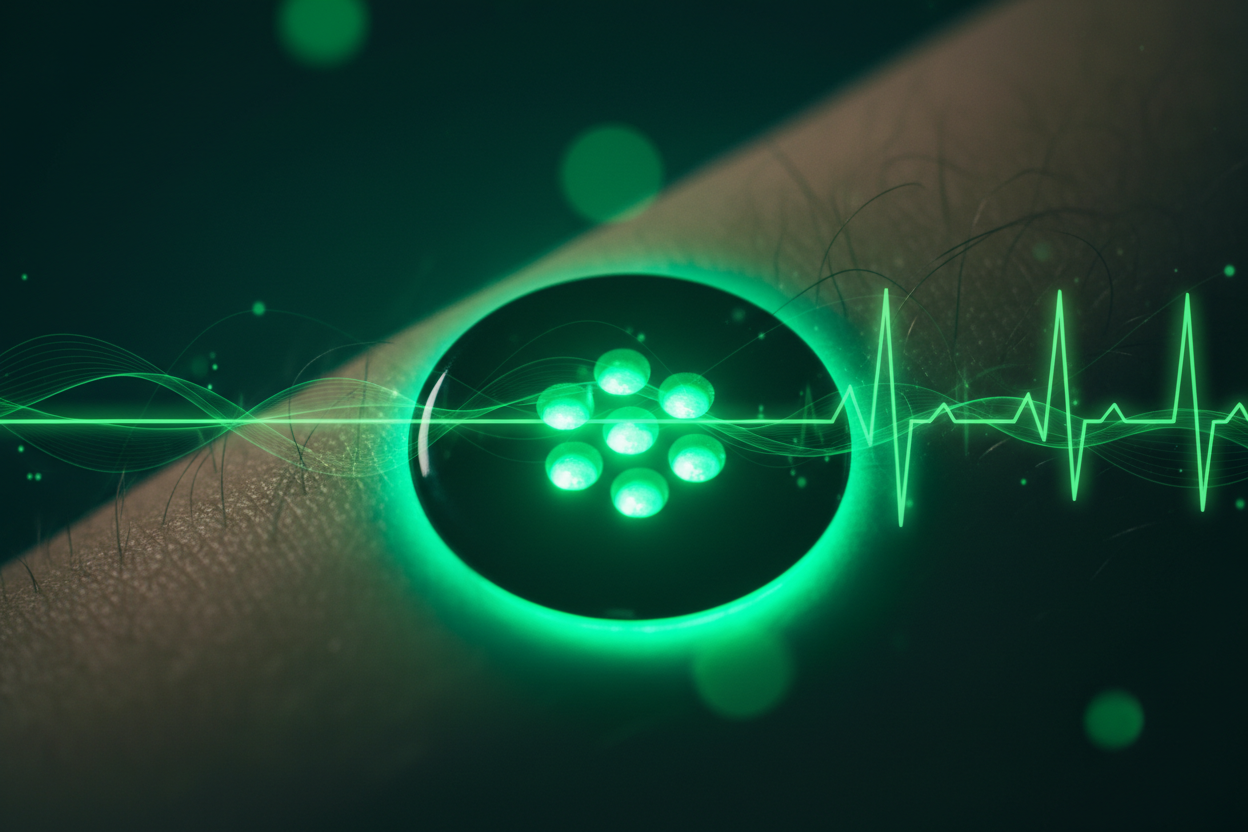
Your watch uses something called PPG (photoplethysmography – say that three times fast, I dare you). Here’s the simple version:
-
A green LED shines into your skin.
-
Your blood is red, and red blood loves to absorb green light – way more than the skin or tissue around it.
-
Every time your heart beats, a fresh wave of blood rushes through your vessels. That means more green light gets soaked up.
-
Between beats, blood flow dips, so less green light is absorbed and more reflects back.
-
A tiny light sensor catches those split‑second changes in reflected light – and your watch counts them. That’s your heartbeat.
So basically, your watch is watching how much green light “disappears” with every pulse. It’s like a strobe light for your circulatory system.
Then why does it sometimes glow red?
You’ve probably seen a red flash on the back of your watch. That’s not for heart rate – that’s for blood oxygen (SpO₂).
-
Green light = perfect for pulse because blood absorbs it so well.
-
Red + infrared light = better for oxygen, because oxygen‑rich blood and oxygen‑poor blood absorb red light very differently.
So when that red glow pops up, your watch is asking a different question: “How much oxygen is hitching a ride on your red blood cells?”
Two colours, two jobs – clever, right?
Why your watch sometimes lies to you
PPG is smart, but it’s not infallible. Here are the usual suspects that mess with the numbers:
-
Movement – Shaking your arm while running creates “noise” that can mask your real pulse. Algorithms try to filter it, but they’re not perfect.
-
Skin tone – More melanin means more light absorbed before it reaches the blood, which can weaken the signal – especially during brisk activity.
-
Tattoos – Dark ink blocks light like a curtain. If your tattoo covers the sensor area, good luck getting a reliable reading.
-
Loose fit – If your watch slides around, light leaks out and the sensor picks up stray reflections. Snug is the way to go.
-
Cold weather – Chilly skin constricts your blood vessels, shrinking the signal and making it harder to detect.
The bottom line
Your smartwatch isn’t reading your mind – it’s reading light. A green beam, a tiny sensor, and a bit of clever math turn flickering reflections into that neat little number on your screen.
It’s not hospital‑grade, and it can be fooled – but for everyday tracking, it’s pretty remarkable. Next time someone asks how your watch knows your heart, you can smile and say: “It’s just counting the light my blood drinks up.”
Now go ahead – give your wrist a wink. It’s earned it. 😉

发表评论
此站点受 hCaptcha 保护,并且 hCaptcha 隐私政策和服务条款适用。